
理学院
通讯地址:江苏省镇江市丹徒区长晖路666号江苏科技大学长山校区
个人邮箱:gdzhu@just.edu.cn
邮政编码:212000
办公地点:江科大长山校区1047
传真:
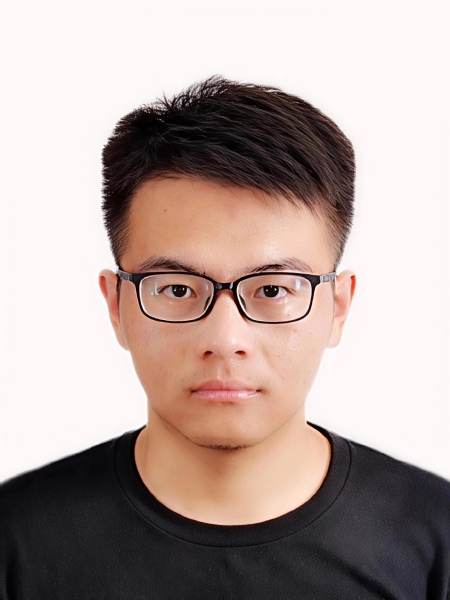
朱国栋,中共党员,籍贯:江苏省盐城市,2024年9月获大连理工大学理学博士学位。2024年12月加入江苏科技大学理学院光电工程系。近年来,主要从事表面等离激元光子学、增强手性探测等方面的研究工作。在Advanced Optical materials、Physical Review A、New Journal of Physics等物理学领域重要学术期刊上发表论文21篇,其中一作论文7篇。
工作经历:
2024年-至今,江苏科技大学,讲师
教育经历:
2018年-2024年,大连理工大学物理学院,光学,理学博士
2014年-2018年,中国矿业大学物理学院,光电信息科学与工程,理学学士
主要研究方向:
1.表面等离激元光子学、等离激元手性
强光学活性手性纳米结构的设计与制备
等离激元高阶共振光学活性的分析
等离激元增强手性分子传感
2.光与物质强相互作用
等离激元与手性分子强相互作用分析
3.手性光学力
特殊光场调控光学活性
手性分子的光学筛选
个人科研主页:
https://orcid.org/0000-0002-8532-1238
https://scholar.google.ca/citations?user=LZQXi-AAAAAJ&hl=en&oi=ao
科研论文:
[1]G. Zhu, Y. Wang, M. Xia, Z. Sun, and Y. Fang, “Multipolar Coupling Engineered by Normalized Geometric Torsion for Enhanced Chiral Plasmonic Responses,” Annalen der Physik 538, no. 9, (2026): e70282.
[2]G. You, G. Zhu, and Y. Fang, “In-Depth Analysis of Plasmon Modes on Silver Nanotriangular Flakes with Plasmon Hybridization,” Plasmonics 20, no. 2, (2025): 1107.
[3]T. Zhu, G. Zhu, C. Li, B. Shi, R. Feng, Y. Cao, Y. Fang, and W. Ding, “Generalized Spin–Curl Force Beyond the Stress Tensor,” Sensors 25, no. 17, (2025): 5367.
[4]X. Wei, X. Zhang, R. Li, Y. He, G. Zhu, F. Ju, O. Romanov, Y. Fang, Y. Liang, and W. Peng, “A 2.5-dimensional plasmonic metafiber with spatially misaligned nanoarrays for enhancing interaction between light field and hydrogen-sensitive materials,” Sensors and Actuators B: Chemical, (2025): 139130.
[5]G. Zhu, Z. Sun, T. Zhu, W. Peng, and Y. Fang, “Distinguishing Intrinsic and Extrinsic Chirality via Dynamic Polarizability Tensor Retrieval for Maximum Optical Activity,” ACS Applied Optical Materials 2, no. 6, (2024): 1209.
[6]G. Zhu, Z. Sun, S. Zhang, H. Liu, Y. Chen, N. Gao, W. Peng, and Y. Fang, “Position-dependent plasmonic chirality of particles in tightly focused light field,” Physical Review A 110, no. 2, (2024): 023506.
[7]W. Bian, G. Zhu, F. Ma, and Y. Fang, “Sandwich-type planar chiral metamaterials for exploring circular dichroism,” Plasmonics 19, no. 1, (2024): 389.
[8]W. Bian, G. Zhu, F. Ma, T. Zhu, and Y. Fang, “Fano Resonance-Associated Plasmonic Circular Dichroism in a Multiple-Dipole Interaction Born–Kuhn Model,” Sensors 24, no. 23, (2024): 7517.
[9]W. Bian, G. Zhu, F. Ma, and Y. Fang, “Design broadband circular dichroism filter regulated by stacked C-shaped plasmon chiral metamaterial,” Plasmonics 19, no. 4, (2024): 2155.
[10]G. Zhu, Z. Sun, J. Liu, and Y. Fang, “Multipole Analysis of the Extinction Cross Section and Circular Dichroism of Chiral Metamolecules with Optical Theorem,” Advanced Optical Materials 11, no. 9, (2023): 2202677.
[11]G. Zhu, H. Wei, Z. Sun, J. Liu, X. Wei, Y. Liang, W. Peng, and Y. Fang, “Quantitative analysis of circular dichroism at higher-order resonance of extrinsic plasmonic chiral nanostructures using multipole decomposition combined with the optical theorem,” New Journal of Physics 25, no. 10, (2023): 103044.
[12]J. Liu, G. Zhu, Y. Chen, Z. Sun, and Y. Fang, “Uncovering the Multipolar Contribution for Plasmonic Activity in Multiparticle Metamolecules Manipulated with an Atomic Force Microscope,” The Journal of Physical Chemistry C 127, no. 44, (2023): 21603.
[13]W. Bian, G. Zhu, and Y. Fang, “Tunable circular dichroism based on chiral photonic crystals,” Journal of Nanophotonics 17, no. 2, (2023): 026015.
[14]Y. Chen, N. Gao, G. Zhu, and Y. Fang, “Chiral topological whispering gallery modes formed by gyromagnetic photonic crystals,” Physical Review B 108, no. 19, (2023): 195423.
[15]N. Gao, G. Zhu, Y. Huang, and Y. Fang, “Plasmonic hybridization properties in polyenes octatetraene molecules based on theoretical computation,” Chinese Physics B 32, no. 3, (2023): 037102.
[16]Y. Nie, C. Xie, G. Zhu, and Y. Fang, “Trapping and sorting of nanoparticles by bowtie-nanohole plasmonic tweezers,” Journal of Physics B: Atomic, Molecular and Optical Physics 56, no. 17, (2023): 175401.
[17]G. Zhu, L. Qv, Y. Guo, and Y. Fang, “Ring gap resonance modes on disk/film coupling system caused by strong plasmon interaction,” Plasmonics 17, no. 1, (2022): 87.
[18]Y. Guo, G. Zhu, and Y. Fang, “Plasmon–exciton coupling between plasmons and chiral molecules in core–shell structure under circularly polarized light excitation,” Journal of Applied Physics 129, no. 4, (2021).
[19]G. Zhu, Y. Guo, B. Dong, and Y. Fang, “Quantization of electromagnetic modes and angular momentum on plasmonic nanowires,” Chinese Physics B 29, no. 8, (2020): 087301.
[20]Y. Guo, G. Zhu, W. Bian, B. Dong, and Y. Fang, “Orbital angular momentum dichroism caused by the interaction of electric and magnetic dipole moments and the geometrical asymmetry of chiral metal nanoparticles,” Physical Review A 102, no. 3, (2020): 033525.
[21]X. Tian, S. Sun, E. S. P. Leong, G. Zhu, J. Teng, B. Zhang, Y. Fang, W. Ni, and C.-y. Zhang, “Fano-like chiroptical response in plasmonic heterodimer nanostructures,” Physical Chemistry Chemical Physics 22, no. 6, (2020): 3604.
欢迎有志于科研的本科生联系我,一起学习共同进步。
1.表面等离激元光子学、等离激元手性
强光学活性手性纳米结构的设计与制备
等离激元高阶共振光学活性的分析
等离激元增强手性分子传感
2.光与物质强相互作用
等离激元与手性分子强相互作用分析
3.手性光学力
特殊光场调控光学活性
手性分子的光学筛选
2014-2018年 中国矿业大学物理学院 光电信息科学与工程(理学学士)
2018-2024年 大连理工大学物理学院 光学(理学博士)
2025-至今 南京大学电子科学与工程学院 在职博士后
|
|


学校地址:江苏省镇江市丹徒区长晖路666号
邮编:212100

版权所有©2013-2022 江苏科技大学 苏ICP备05063164号

